02 — An essay
Architecture is theology.
America’s historic churches are more than old buildings. For generations of Americans, and for Christians above all, they are where faith was made visible.
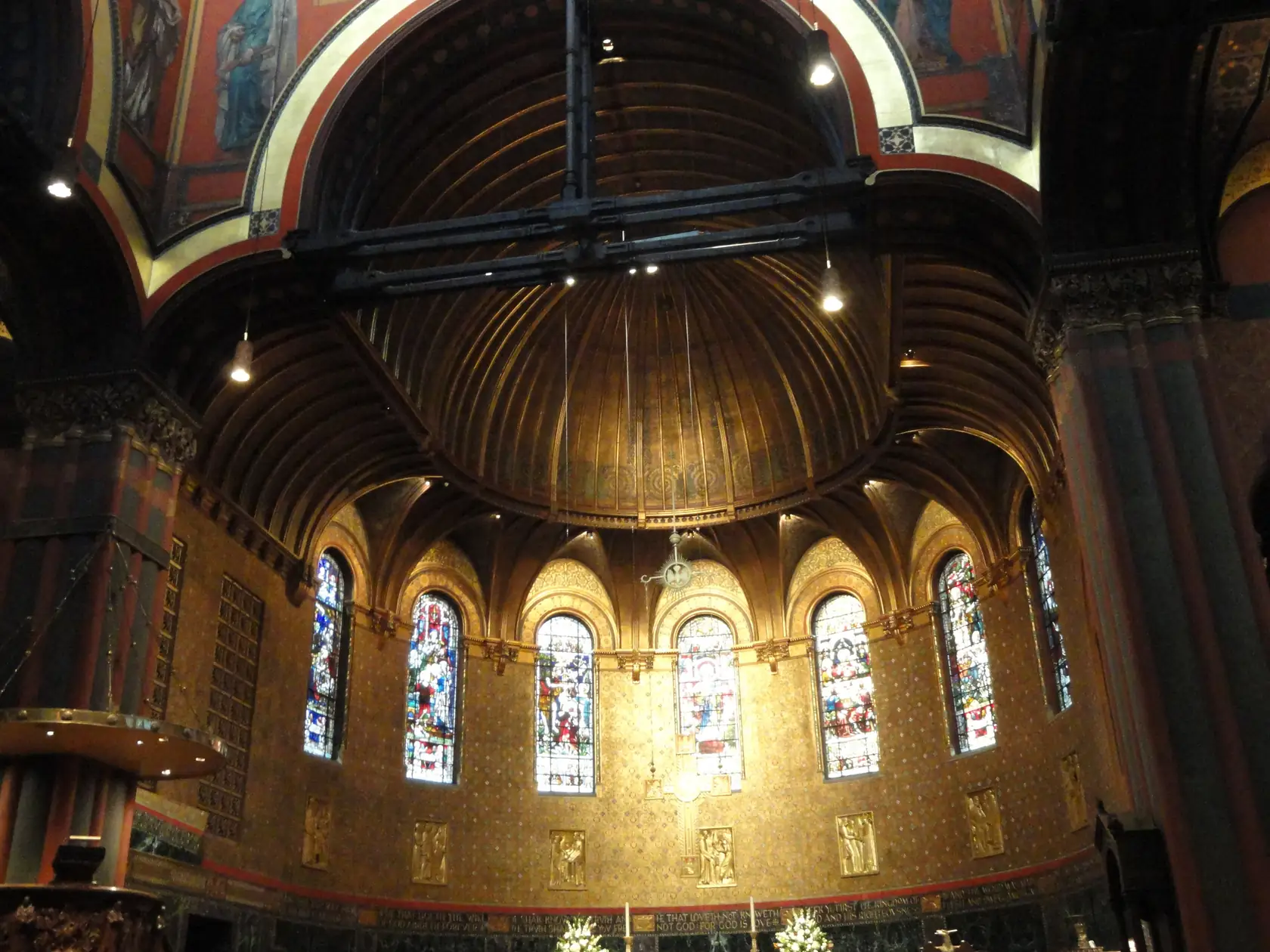
The chancel of Trinity Church, Boston. A nave draws the worshipper toward the pulpit and the table.
Photograph by Daderot. CC0 1.0. Source. Shown as an example. Not a property of American Church Conservancy.

More than old buildings
Families were baptized, married, and buried in them. Cities gathered in them in times of grief and thanksgiving. Week after week, the Word of God was preached from their pulpits. They carry a spiritual weight in their communities that no new building can simply inherit.
A congregation can be faithful in a rented hall or a school gym. The church is the people of God, not the stone. That is not in question. What is in question is what a neighborhood loses when the room that has carried prayer for a century is sold out from under it. The weight of that room does not travel with the deed. It was made by the Word preached there, by the baptisms and the burials, by ordinary Sundays. A new building, however sincere, does not simply inherit it.
Built to preach
These churches were built to preach. A spire lifts the eye heavenward. A nave draws the worshipper toward the pulpit and the table. Stone and timber speak of permanence, and light through stained glass tells the story of redemption to anyone who walks in. Their builders understood that architecture is theology: the form of a church declares what a people believe about God, His holiness, His beauty, and His nearness.
Proportion is not decoration. A low ceiling says one thing about the God who is worshipped. A room that rises, and that draws the body toward the Word and the table, says another. We do not say that a plain room cannot be a true church. We do say that when a people spend themselves on height, stone, and light, they are confessing something in public, and that confession deserves to be kept where it can still be heard.
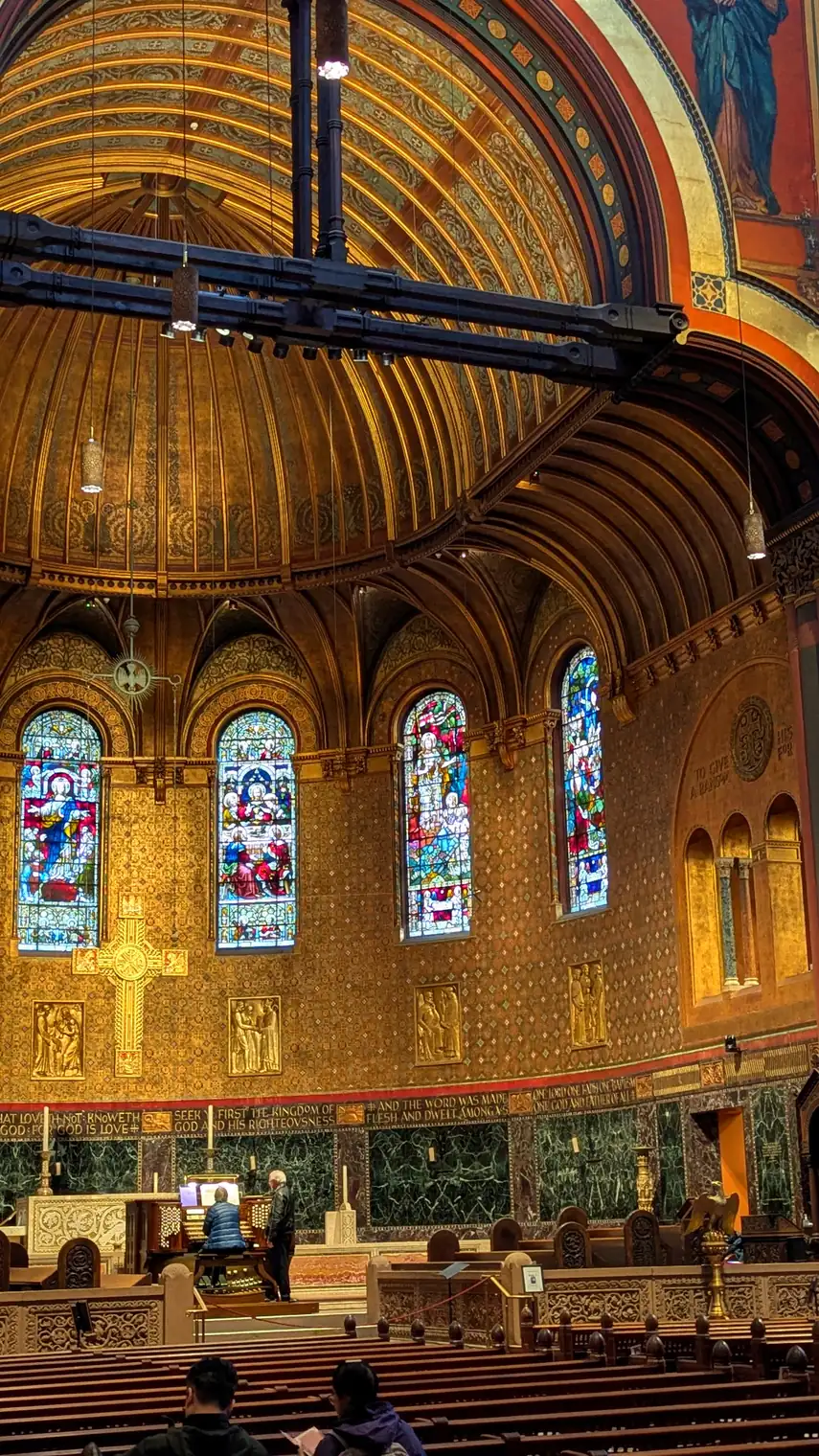
Height inside Trinity Church, Boston. The room itself lifts the eye.
Photograph by Daderot. CC0 1.0. Source. Shown as an example. Not a property of American Church Conservancy.

Stone, light, height, and proportion confess what a people believe about God.
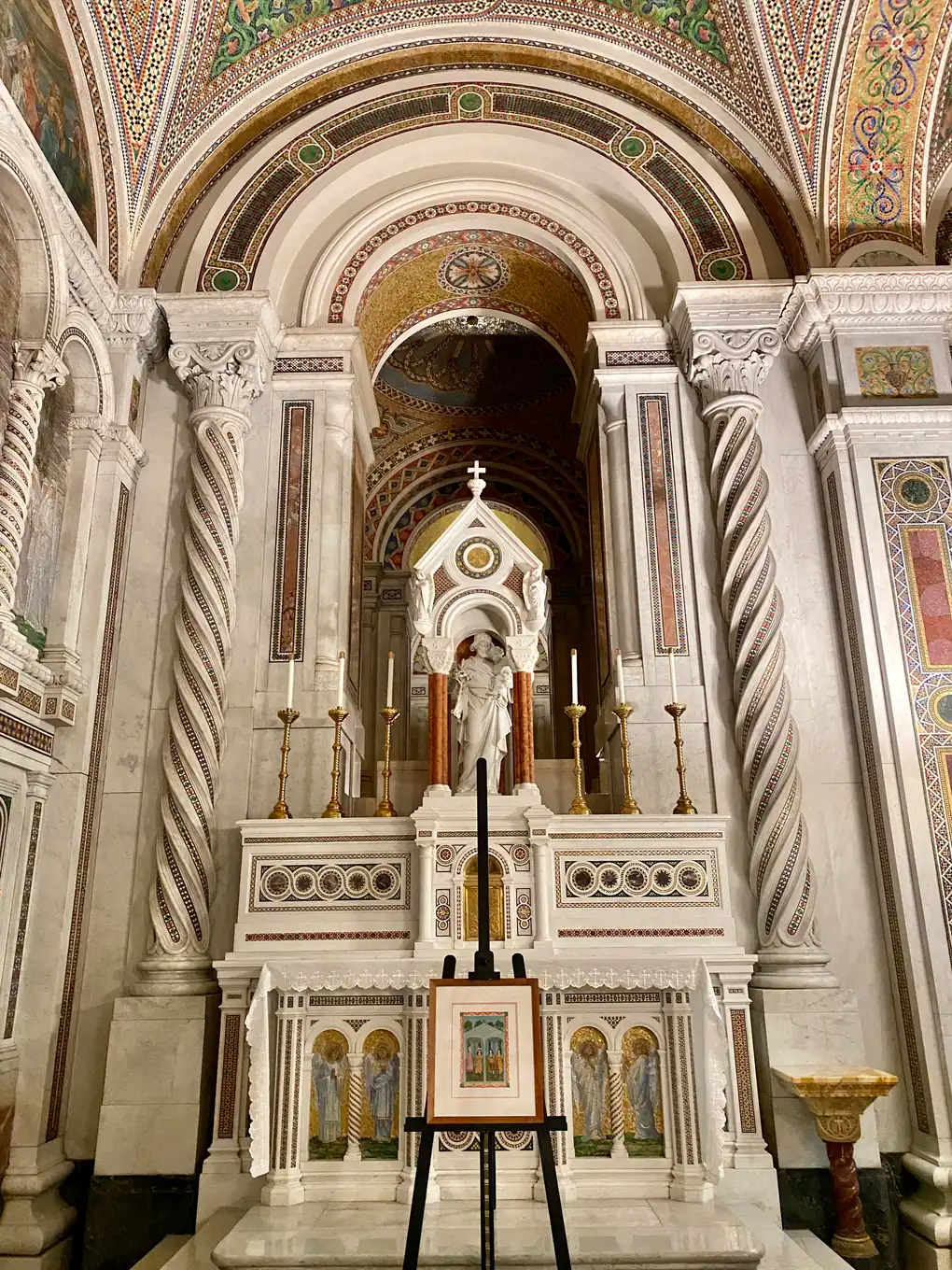
Cathedral Basilica of St. Louis, designed by Barnett, Haynes and Barnett. An interior of this craft is not a thing a congregation can now decide to build.
Photograph by w_lemay. CC BY-SA 2.0. Source. Shown as an example. Not a property of American Church Conservancy.

Lost for good
Once such a building is lost, it is lost for good. Even ordinary new church construction typically costs $200 to $350 per square foot before land,1 and architecturally distinctive work is cited higher still, about $375 to $550 per square foot for the building itself, land not included.2 The masonry, carving, and glass of a century-old sanctuary are beyond the reach of almost any congregation today. Preserving these churches is far easier than building anything of comparable beauty, and if they fall, they will almost certainly never be built again.
We are not offering a census of closed churches. We will not invent one. The pattern is visible from the sidewalk: a sanctuary becomes condominiums, or a bar, or a hole in the block. The figures above are published by people who finance and estimate church construction. They mark the distance between a congregation’s ordinary means and the beauty already standing on the corner.
Restoration is not free. Roofs fail, stone sheds its face, glass needs leading, and old systems age. Keeping a church asks for skill and for money. It does not ask a generation to invent, from nothing, the height and the craft a previous generation spent itself to build.
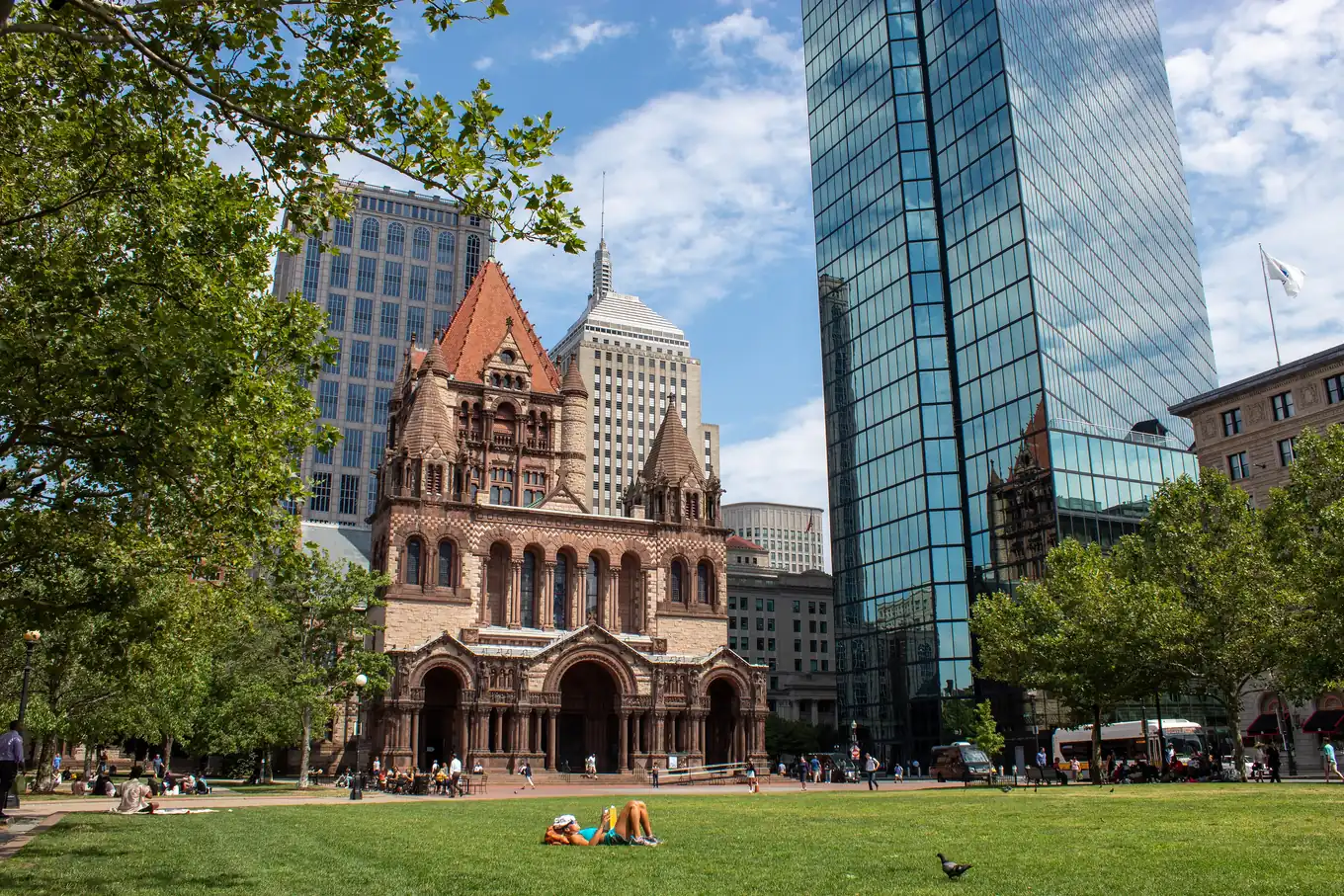
Trinity Church still stands in Copley Square, beside a glass tower. The photograph is here because it makes a plain point: a sacred building holds its ground in the commercial city, or it does not. This church is not for sale on this site.
Photograph by Gregg Squeglia. CC BY-SA 4.0. Source. Shown as an example. Not a property of American Church Conservancy.

Held, and filled
American Church Conservancy exists to keep them standing, and to keep them preaching: held in permanent trust and filled each Lord’s Day by theologically conservative, Bible-believing congregations.
The means are plain. Major gifts buy a historic city-center church when it comes to sale. The Conservancy restores it, keeps the title, and leases it below the downtown market to a congregation that subscribes to the Westminster Confession of Faith or the Baptist Faith and Message 2000. The building does not become a private redevelopment. It remains a place of worship, and it remains an asset held for that purpose.
The Conservancy is just beginning. No church has been acquired. The first purchase is planned for 2027, when the gifts to do it are in hand. The photographs on this page are examples of the architecture, not a portfolio.
- 1CEF Core, “Church Building Project Cost Estimator,” lists new construction from the ground up at $200–$350 per square foot. The page also notes that architectural fees, permits, furnishings, and contingency can add substantially to the construction figure. Land is not included. cefcore.com/tools/church-building-project-cost-estimator.
- 2ChurchLend, “Church Construction Timeline & Budget,” lists hard construction cost — the contractor’s price for the building itself — for a premium facility with architectural distinction at $375–$550 per square foot. Land is not included, and the page treats these as national averages that move with region and site. churchlend.com/resources/church-construction-timeline-budget.