01 — The model
Acquire, restore, lease, steward.
Major gifts buy a historic church. The Conservancy restores it, holds the title permanently, and leases it at below-market rent to a theologically conservative, Bible-believing congregation.
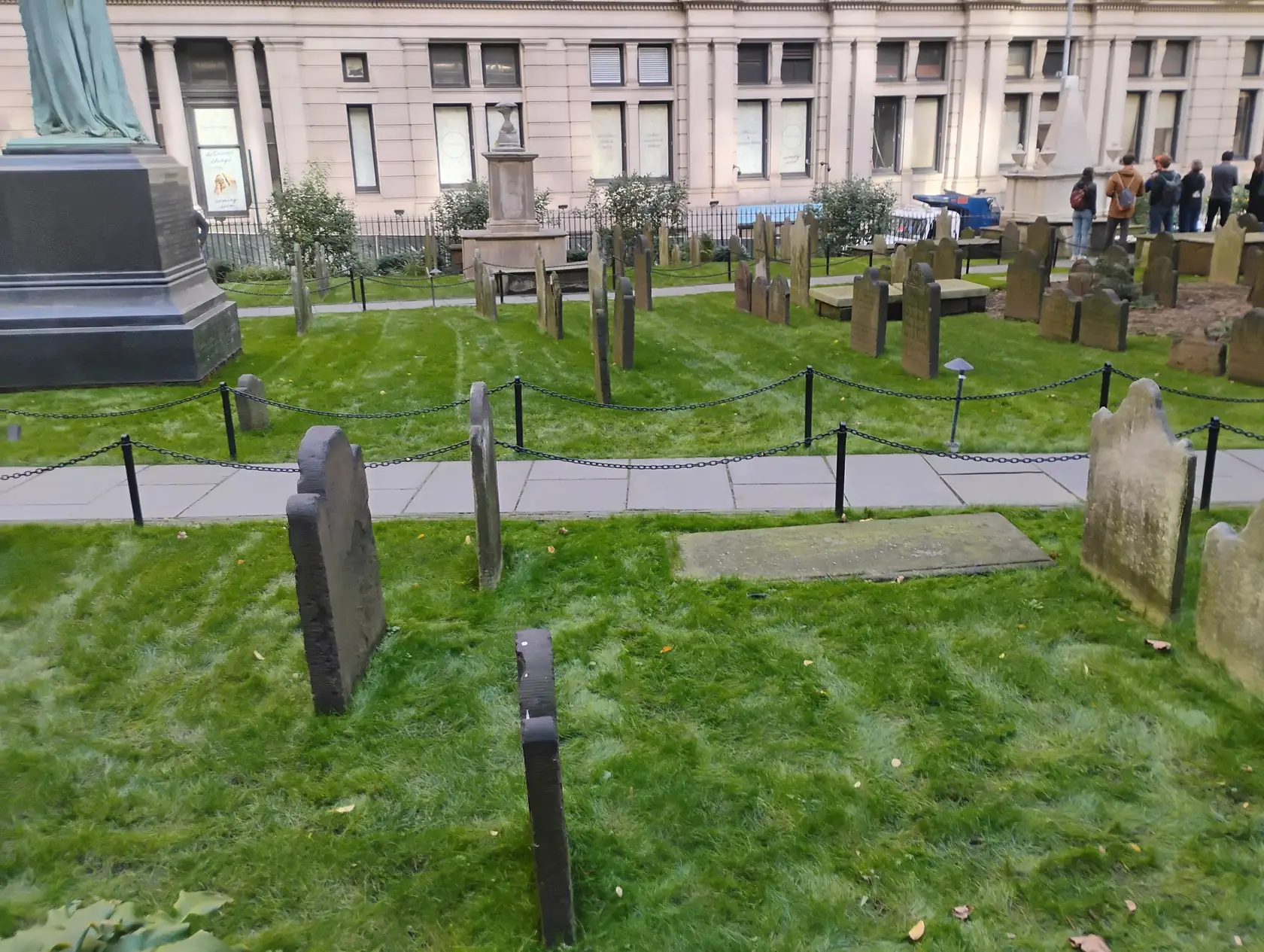
Trinity Church and its churchyard at the head of Wall Street, New York. Stone held in the middle of the market.
Photograph by Ferfive. CC BY 4.0. Source. Shown as an example. Not a property of American Church Conservancy.
.jpg)
01
Acquire
When a historic, beautiful church in the center of a city comes up for sale, the usual buyers are not congregations. The price of downtown land pulls the building toward condominiums, a bar, an event hall, or demolition. The Conservancy is formed to be a different buyer.
The purchase is funded by major gifts. This is not a program of small annual appeals, and it is not a mortgage laid on the congregation that will worship there. A donor, or a small company of donors, puts the building into trust. The Conservancy takes title.
No building has been bought. The first acquisition is planned for 2027, when the gifts to do it are in hand. Until a specific church is in view, there is no campaign to join and no price to publish.
02
Restore
A church that has come to market has often been loved and then deferred. The roof, the stone, the windows, the heat, the wiring: some of it will need work before a congregation can be asked to fill it for another fifty years.
Restoration, here, means the fabric. It means making the building sound and fit for worship, not remodeling it into something else. The height stays. The light stays. The room continues to preach what it was built to preach. Each project will be scoped when the building is known. We will not publish a restoration budget for a church we have not yet seen.
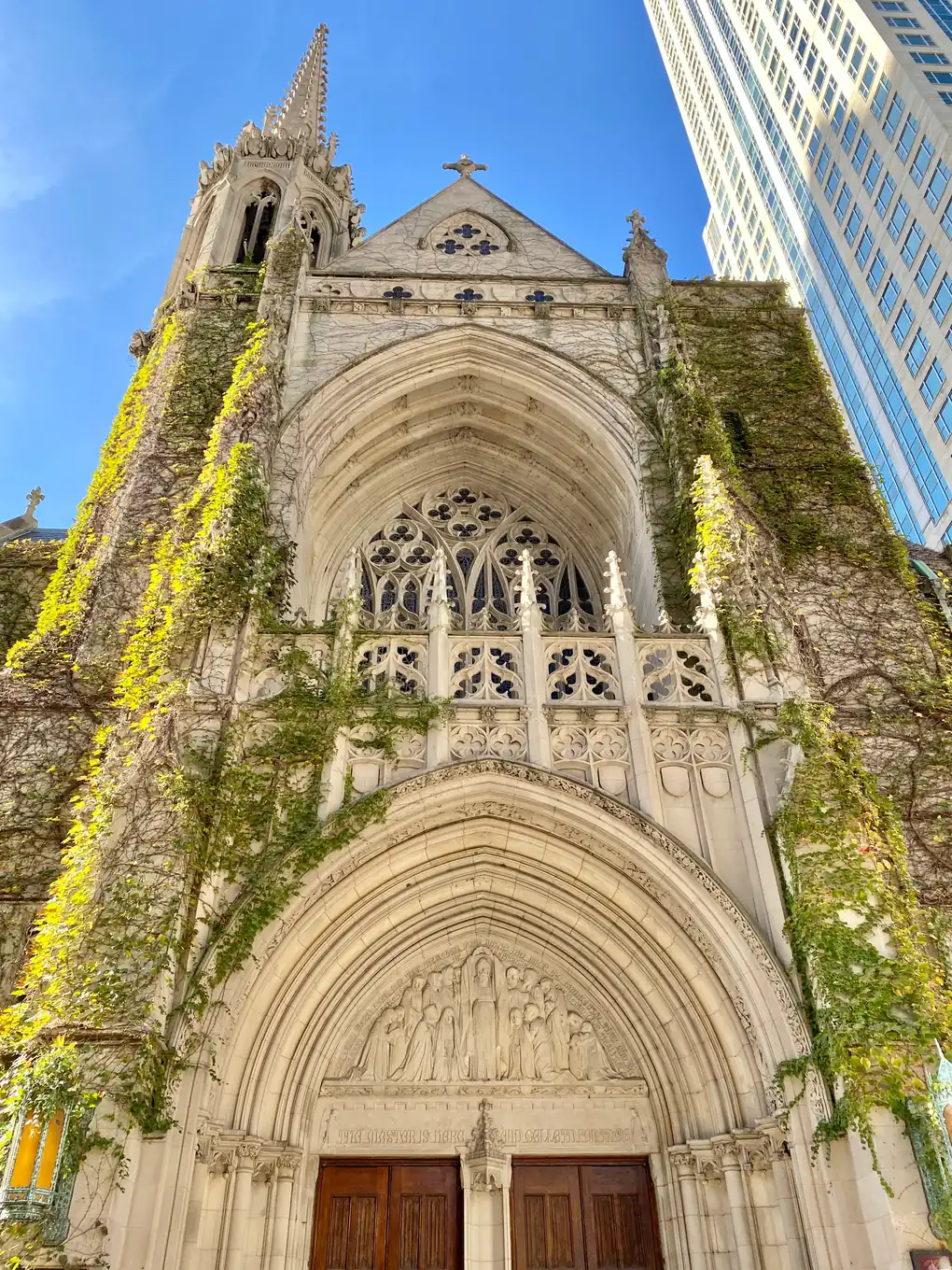
Fourth Presbyterian Church, North Michigan Avenue, Chicago, designed by Ralph Adams Cram and Howard Van Doren Shaw, 1912–1914.
Photograph by w_lemay. CC BY-SA 2.0. Source. Shown as an example. Not a property of American Church Conservancy.

03
Lease
The church is leased to one congregation, for worship and for the ministry of that church. The tenant subscribes to the Westminster Confession of Faith or to the Baptist Faith and Message 2000, and teaches in line with that confession. Presbyterian churches are not asked to become Baptist. Baptist churches are not asked to become Presbyterian. The polity stays. The confession is the threshold.
Rent is below what a downtown landlord would ask for the building. It is not a token, and it is not a market return. It should be a sum a congregation can pay from ordinary giving and still carry a ministry. The figure will be set for each house when that house is in hand. We will not publish a rate we have not yet charged.
The lease will also say, building by building, who cares for what. What the covenant fixes in advance is the purpose: Christian worship, by a theologically conservative, Bible-believing congregation, in a building the Conservancy does not intend to sell.
04
Steward
Title stays with the Conservancy. That is the point of a trust rather than a grant. A gift that buys a church should not be one renovation away from a condominium conversion. If a congregation leaves, or departs from the confession named in the covenant, the building is leased again to a congregation that meets it. It is not sold into another use.
Over time the holdings are an asset base: real churches, in real cities, kept for worship. The Conservancy is not claiming to be the only body that cares about old churches. It is one instrument, aimed at a particular end — theologically conservative, Bible-believing congregations, in the historic rooms at the center of town.
The covenant on the building
Every lease carries the same promise, written for that building. The premises are for the worship and ministry of a congregation that subscribes to the Westminster Confession of Faith or the Baptist Faith and Message 2000. The use does not drift into a commercial tenancy. The confession is not a slogan in a brochure. It is a condition of staying.
A summary of those confessions is on the about page. The full standard, for a particular church, will be the confession itself, named in the lease.
Donors
Request a briefing
Congregations
Ask about a lease